

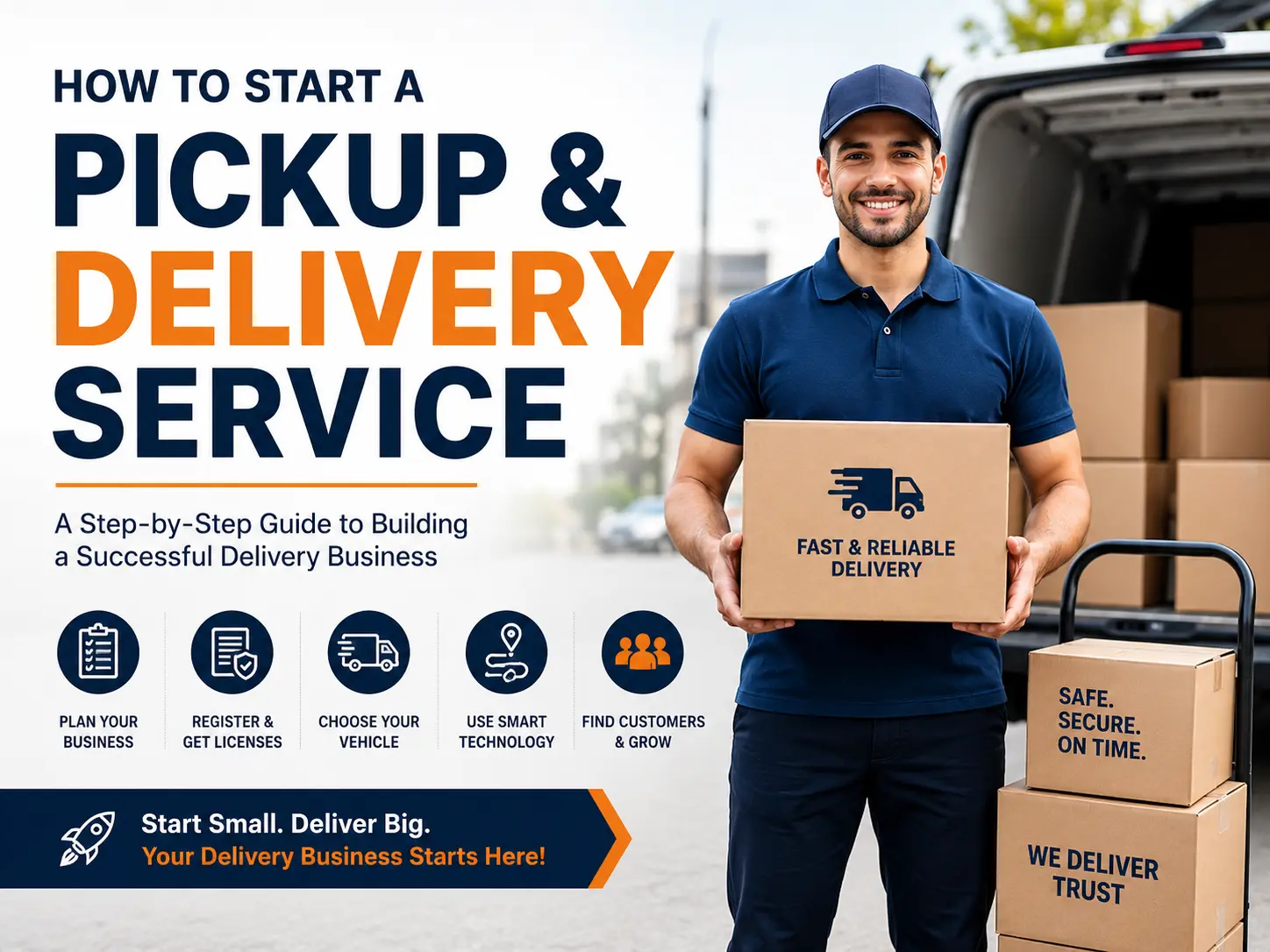
How to Start a Pickup and Delivery Service: A Complete Guide for Entrepreneurs
The demand for pickup and delivery services has grown rapidly due to eCommerce, online shopping, food delivery, and local business logistics. Whether you’re looking to work independently or build a full-scale logistics company, learning how to start a pickup and delivery service can open the door to a profitable and scalable business.
In this guide, we’ll cover everything you need to know about starting a delivery business, from planning and licensing to finding customers and growing your operations.
Why Start a Pickup and Delivery Service?
Consumers and businesses increasingly rely on delivery services for convenience. Retail stores, pharmacies, restaurants, eCommerce sellers, and local businesses all need reliable transportation solutions.
Benefits of starting a courier business include:
- Low startup costs compared to many other businesses
- Flexible business model
- Growing market demand
- Opportunity to scale quickly
- Recurring revenue from business clients
With the right strategy, a courier business can become a steady source of income and long-term growth.
Step 1: Choose Your Delivery Niche
Before launching your business, determine the type of deliveries you want to handle.
Common delivery niches include:
Local Package Delivery: Deliver packages for individuals and local businesses within a city or region.
Same-Day Delivery: Provide fast delivery services for urgent shipments.
Medical Courier Services: Transport prescriptions, medical supplies, and healthcare products.
eCommerce Deliveries: Partner with online stores that need local fulfillment and delivery support.
Business-to-Business (B2B) Courier Services: Handle regular deliveries between offices, warehouses, and retailers.
Choosing a niche allows you to target specific customers and stand out from competitors.
Step 2: Create a Business Plan
A solid business plan serves as the foundation of your delivery company.
Your plan should include:
- Business goals
- Target market
- Services offered
- Pricing structure
- Marketing strategy
- Operational workflow
- Startup budget
- Revenue projections
Having a clear plan also makes it easier to secure financing if needed.
Step 3: Register Your Business
When starting a courier business, legal compliance is essential.
Depending on your location, you may need:
- Business registration
- Tax identification number
- Commercial vehicle registration
- Local permits and licenses
- Business insurance
Consult local regulations to ensure your delivery business operates legally.
Step 4: Purchase or Lease Vehicles
Your vehicle is one of the most important assets in a pickup and delivery service.
Popular vehicle options include:
- Cars
- Vans
- Pickup trucks
- Motorcycles
- Cargo vans
Choose vehicles based on the size and type of items you plan to transport.
Step 5: Invest in Technology
Modern delivery businesses rely heavily on technology.
Consider using:
- Route optimization software
- GPS tracking systems
- Delivery management platforms
- Mobile driver applications
- Customer notification systems
Technology helps improve efficiency, reduce fuel costs, and enhance customer satisfaction.
Step 6: Set Competitive Pricing
Research local competitors and determine pricing based on:
- Distance
- Package size and weight
- Delivery urgency
- Fuel costs
- Labor expenses
Many courier businesses offer:
- Flat-rate delivery
- Per-mile pricing
- Same-day delivery premiums
- Monthly contracts for business clients
A balanced pricing strategy helps attract customers while maintaining profitability.
Step 7: Build a Professional Website
A professional website helps establish credibility and generate leads.
Your website should include:
- Service descriptions
- Online quote request forms
- Contact information
- Service areas
- Customer testimonials
- Tracking capabilities
Optimize your website for keywords such as:
- How to start a pickup and delivery service
- Starting a delivery business
- How to start a courier business
- Courier business services
SEO can help attract customers searching for delivery services online.
Step 8: Market Your Delivery Business
Effective marketing is essential for business growth.
Local SEO: Optimize your website and business listings for local searches.
Google Business Profile: Create and optimize your business profile to appear in local search results.
Social Media Marketing: Promote your services on Facebook, Instagram, LinkedIn, and TikTok.
Networking: Connect with local retailers, warehouses, pharmacies, and eCommerce sellers.
Referral Programs: Offer incentives to existing customers who refer new clients.
Step 9: Focus on Customer Service
Excellent customer service helps build trust and encourages repeat business.
Best practices include:
- On-time deliveries
- Real-time tracking
- Fast communication
- Professional drivers
- Secure package handling
Satisfied customers often become long-term clients and recommend your services to others.
Step 10: Scale Your Operations
Once your business gains traction, consider expanding by:
- Hiring drivers
- Adding vehicles
- Expanding service areas
- Offering specialized delivery services
- Partnering with local businesses
Scaling strategically allows your courier business to increase revenue while maintaining service quality.
How Much Does It Cost to Start a Pickup and Delivery Service?
Startup costs vary depending on business size and location.
Typical expenses include:
- Vehicle purchase or lease
- Fuel and maintenance
- Insurance
- Business registration
- Website development
- Marketing and advertising
- Delivery software
Many entrepreneurs start with a single vehicle and gradually expand as revenue grows.
Common Challenges in the Courier Business
Every business faces obstacles. Common challenges include:
- Fuel price fluctuations
- Traffic delays
- Vehicle maintenance
- Competition
- Driver management
- Customer expectations
Planning ahead and implementing efficient systems can help overcome these challenges.
Final Thoughts
If you’ve been researching how to start a pickup and delivery service, now is an excellent time to enter the industry. The continued growth of eCommerce and local delivery demand creates significant opportunities for entrepreneurs.
Whether you’re interested in starting a delivery business as a side hustle or building a large-scale courier company, success depends on careful planning, reliable service, smart marketing, and a customer-first approach.
By following the steps outlined in this guide, you’ll be well-positioned to launch and grow a profitable courier business that serves both individuals and businesses in your community.